

Bonsai's New Growth: Sensors & AI
Bonsai cultivation has been a personal art form for centuries, demanding patience and observation. Now, technology is entering this ancient practice. Affordable sensors and artificial intelligence are changing bonsai care, augmenting traditional methods and supporting both new and experienced enthusiasts.
Traditionally, watering, fertilizing, and repotting bonsai relied on visual cues and intuition, requiring years to develop. Now, inexpensive sensors monitor environmental factors, and AI algorithms analyze this data to inform care decisions. This blend of old and new is changing how people approach bonsai.
This technology empowers bonsai keepers with more information, acting like a digital assistant for tree well-being. It helps beginners overcome the learning curve and offers experienced keepers detailed data and predictive capabilities. Smart technology integration in bonsai is a growing trend.
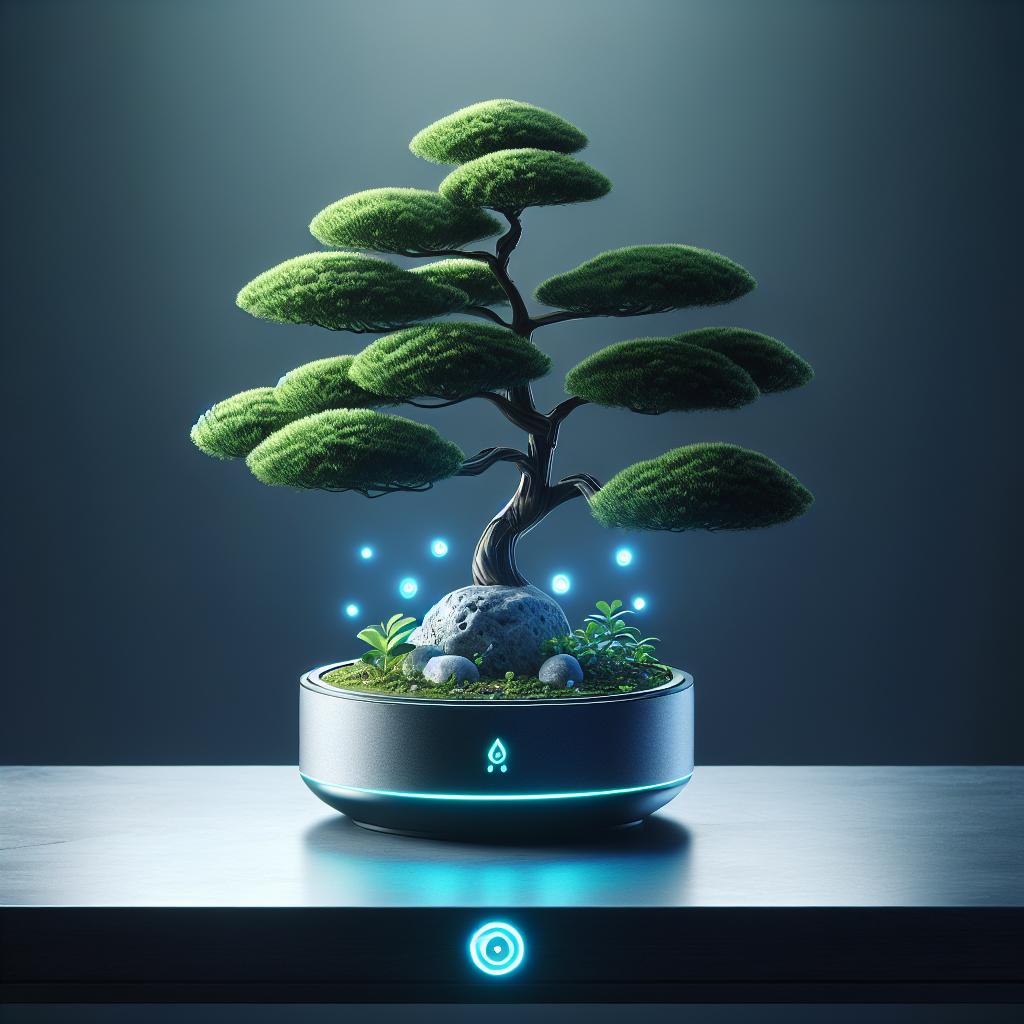
Decoding Bonsai Needs: Sensor Technology
Smart bonsai care uses sensors to monitor the tree’s environment. Soil moisture sensors are common and important, measuring water content to prevent overwatering and underwatering, common beginner mistakes. Knowing the specific moisture level is more accurate than checking the soil surface.
Light sensors measure light intensity for photosynthesis, helping ensure your tree gets the optimal amount for its species. Temperature and humidity sensors track surrounding air data, impacting transpiration and health. These are often combined for convenience, especially for indoor bonsai.
Nutrient level sensors are emerging but are more complex, expensive, and not yet widely available for home use with variable accuracy. Basic soil moisture sensors cost about $15, while multi-sensor systems can cost hundreds. DIY options with Arduino or Raspberry Pi are cheaper but need technical skill.
Each sensor provides a piece of the puzzle. Combining data from multiple sensors gives a comprehensive picture of your bonsai’s needs. It’s about understanding why the soil is dry – low humidity, high temperatures, or lack of watering.
Data to Decisions: AI-Powered Insights
Sensor data is not useful on its own. AI algorithms unlock the potential of smart bonsai care by analyzing this data for patterns and correlations: how soil moisture changes with temperature and humidity, or how the tree reacts to light levels. The AI learns your bonsai’s specific needs, considering its species, location, and individual characteristics.
This learning process is machine learning. The AI learns from experience, refining predictions based on new data. For example, an AI might notice your Japanese maple shows stress when soil moisture drops below a certain level, even if it’s higher than generally recommended for the species. It can then alert you to water the tree before visible stress appears.
AI can predict potential problems by analyzing historical data and current conditions to identify risks like overwatering, pests, or nutrient deficiencies. Integrating weather data enhances predictions, allowing the AI to anticipate changes in temperature, humidity, and sunlight. AI provides valuable insights but isn't foolproof.
AI insight accuracy depends on data quality and quantity. More data helps the AI learn and predict better. Consistently monitor your bonsai and provide accurate species and growing condition information. The AI needs time to learn and adapt; continuous engagement makes the system more valuable.
- Collect sensor data consistently.
- Provide accurate information about your bonsai’s species and location.
- Monitor the AI’s predictions and validate its recommendations.
- Be patient and allow the AI time to learn.
Commercial Systems: What's Available Now?
Companies offer commercial systems combining sensors and AI for bonsai care. Koubou provides a sensor kit and subscription service for data analysis and personalized recommendations. Their system monitors soil moisture, light, and temperature, designed for ease of use. Pricing starts around $200 for the kit, plus a $10-$20 monthly fee.
PlantLink offers a modular system for adding sensors. It emphasizes data visualization and control, allowing remote monitoring and adjustment of watering and lighting. This system starts around $300 for a basic kit, offering more flexibility and customization than Koubou, but lacks AI analysis.
Bonsaiempire.com offers sensors and monitoring tools but no integrated AI system. They focus on quality sensors at competitive prices, letting you build your own smart bonsai system. Individual sensors range from $20 to $100. This is a good option for those wanting more control.
undefined
DIY Smart Bonsai: Building Your Own System
If you’re technically inclined, building your own smart bonsai system can be a rewarding and cost-effective alternative to buying a commercial system. The core of your system will be a microcontroller, such as a Raspberry Pi or an Arduino. These small, inexpensive computers can be programmed to read data from sensors and transmit it to a computer or the cloud.
You’ll also need sensors, of course. Soil moisture sensors, light sensors, and temperature/humidity sensors are readily available online for a few dollars each. You can connect these sensors to the microcontroller using jumper wires and a breadboard. Software-wise, there are several open-source options available, such as Node-RED and Home Assistant, that can help you visualize and analyze the data. These platforms often have built-in support for various sensors and data sources.
Setting up a DIY system requires some programming knowledge and a willingness to troubleshoot. However, there are plenty of online resources and tutorials available to help you get started. Websites like instructables.com and hackster.io have numerous projects related to home automation and sensor networks. You can also find helpful communities and forums where you can ask questions and share your experiences.
While a DIY approach requires more effort, it offers several advantages. It’s more affordable, more customizable, and gives you complete control over your data. You can tailor the system to your specific needs and preferences, and you can learn a lot about electronics and programming in the process.
Troubleshooting & Common Pitfalls
Smart bonsai systems aren’t without their challenges. Sensor calibration is crucial for accurate readings. Sensors can drift over time, so it’s important to periodically recalibrate them using a known standard. Data accuracy can also be affected by factors like sensor placement and interference from other devices. Ensure sensors are properly positioned and shielded from external influences.
Connectivity issues are another common problem. Wireless sensors rely on a stable Wi-Fi connection, which can be unreliable in some environments. Consider using a wired connection or a Wi-Fi extender to improve signal strength. Software bugs can also cause problems, so it’s important to keep your software up to date and to report any issues to the developers.
It’s also important to remember that technology is not a substitute for good bonsai care practices. Sensors can provide valuable information, but they can’t tell you everything. You still need to observe your tree regularly and use your judgment. Don’t blindly follow the recommendations of the AI – always consider the specific needs of your tree and its environment.
Regular maintenance is essential. Check the sensors periodically to ensure they’re functioning properly. Clean them as needed and replace them when they reach the end of their lifespan. Validate the data to ensure it’s consistent and accurate. Remember, a smart bonsai system is only as good as the data it collects.
The Future of Bonsai Tech
Looking ahead, the future of smart bonsai care is bright. We can expect to see further advancements in sensor technology, with more accurate, reliable, and affordable sensors becoming available. AI algorithms will become more sophisticated, capable of learning and adapting to the unique needs of individual bonsai trees with even greater precision.
Automation is another area with significant potential. Imagine a system that automatically adjusts watering, fertilization, and lighting based on real-time data and AI predictions. Fully automated bonsai care systems are still a ways off, but the technology is rapidly evolving. This raises interesting questions about the role of the human caretaker in the art of bonsai.
There are also ethical considerations to keep in mind. As AI becomes more prevalent, it’s important to ensure that it’s used responsibly and ethically. We need to avoid creating systems that are overly reliant on technology and that diminish the human connection with nature. The goal should be to enhance the art of bonsai, not to replace it.
Ultimately, the integration of technology into bonsai care has the potential to make this ancient art form more accessible and sustainable. By empowering bonsai keepers with more information and tools, we can help them cultivate healthy, beautiful trees for generations to come. It’s a fascinating evolution, and I'm eager to see what the future holds.
No comments yet. Be the first to share your thoughts!